Optische analyse
Uitgebreide reeks optische analyse- en procesanalysesystemen voor vaste stoffen, vloeistoffen, slurries, deeltjes en gassen
F
L
E
X
Eenvoudige producten
Gemakkelijk te selecteren, installeren en gebruiken
Technische topkwaliteit
Eenvoud
Standaardproducten
Betrouwbaar, robuust en onderhoudsarm
Technische topkwaliteit
Eenvoud
High-end producten
Functioneel en uiterst doelmatig
Technische topkwaliteit
Eenvoud
Technische topkwaliteit
Eenvoud
FLEX selectie
Technische topkwaliteit
Eenvoud
Fundamental selectie
Voldoe aan uw basismeetvoorwaarden
Technische topkwaliteit
Eenvoud
Lean selectie
Beheers eenvoudig uw belangrijkste processen
Technische topkwaliteit
Eenvoud
Extended selectie
Optimaliseer uw processen met innovatieve technologieën
Technische topkwaliteit
Eenvoud
Xpert selectie
Beheers uw meest uitdagende applicaties
Technische topkwaliteit
Eenvoud
New
Vergelijken
Measured variables
Gas components, calorific value, density, Wobbe index, molar mass, compressibility
Measuring medium
Natural gas, biogas, air, H2, O2, N2
Analysis time
≥45 seconds
Measured variables
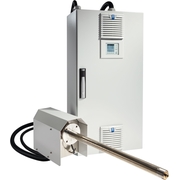
NO, NO2, NH3, SO2
Process temperature
≤ +550 °C
Ambient temperature range
–20 °C ... +55 °C
Hazardous area approvals
IECEx: Ex pzc op is [ia] IIC T3 Gc
Measured variables
Dust concentration (after gravimetric comparison measurement), gas velocity, gas pressure, gas temperature
Process temperature
–20 °C ... +200 °C
Process pressure
–70 hPa ... 10 hPa
Measuring principle
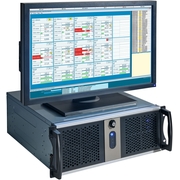
Condition Monitoring for Analyzers
Supported products
FLOWSIC200, GM32, MCS100FT, MCS200HW, MCS300P, MERCEM300Z, VICOTEC320, VICOTEC450, VISIC100SF, VISIC50SF, DUSTHUNTER SB100, DUSTHUNTER SP100, FLOWSIC100, MARSIC300, VICOTEC410, GMS800 (DEFOR + OXOR)
Data output
Monitoring Box frontend
Hosting
Off-premise: https://monitoringbox.endress.com
Contract type
SaaS (Software as a Service)
Measuring principle
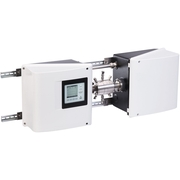
Scattered light forward
Process temperature
-40 °C ... +220 °C
Measuring range
Scattered light intensity: 0 ... 7.5 mg/m3 / 0 ... 3,000 mg/m3
Conformities
TÜV type test
Measured variables
CO2, SO2, NO, NO2, CO, NH3, H2O, CH4
Ambient temperature range
0 °C ... +50 °C
Conformities
MARPOL Annex VI and NTC 2008 – MEPC.177(58)
Measured variables
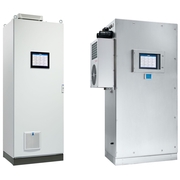
CH4, CO, CO2, Corg, HCl, H2O, NH3, NO, NO2, N2O, O2, SO2
Ambient temperature range
+5 °C ... +50 °C
Process temperature
≤ +550 °C
Measuring range
More than 60 measuring components available (depending on concentration and sample gas composition)
Calculations
5s value, Average value, Daily average value, Monthly average value, Annual average value, Moving monthly average, Mass emissions, Daily mass emissions, Monthly mass emissions, Annual mass emissions, Daily counter, Monthly counter, Annual counter
Measured variables
O2
Measuring range
O2: 0 ... 5 Vol.-% / 0 ... 100 Vol.-%
Ambient temperature range
–20 °C ... +60 °C
Hebt u hulp nodig bij het kiezen van uw optische analysesysteem?
Wij helpen u bij het selecteren en configureren van de producten die het beste aansluiten bij uw meettaken en toepassingen.
Over optische analyse van vaste stoffen, vloeistoffen, slurries, deeltjes en gassen
Endress+Hauser heeft aanzienlijk geïnvesteerd in de toekomst van onze klanten door een uitgebreid assortiment aan instrumenten voor atomaire en moleculaire analyse aan te bieden voor laboratorium-, proces- en emissiemonitoring. Onze toonaangevende optische analysesystemen helpen klanten bij het optimaliseren van cruciale industriële processen en het betrouwbaarder monitoren van productkwaliteit en emissies in realtime. Belangrijke extractieve en in-situ-technieken zijn onder meer Tunable Diode Laser Absorption Spectroscopy (TDLAS), quenched fluorescence (QF), Raman-spectroscopie, NIR, IR, UV/Vis en atoomabsorptie.
Procestransparantie: gegevens uit optische analyses zorgen voor transparantie in processen, waardoor betere beslissingen kunnen worden genomenRealtime metingen: dankzij metingen die binnen enkele seconden of minuten worden uitgevoerd, kunnen gebruikers downtime tot een minimum beperken en de operationele kosten in industriële processen beheersenKwaliteit en betrouwbaarheid: optische analysesystemen helpen klanten bij het optimaliseren van belangrijke industriële processen en het betrouwbaar bewaken van de productkwaliteitNiet-invasieve, handsfree metingen: inline optische analyse maakt veilige, efficiënte en niet-destructieve metingen mogelijk zonder dat er een monstervoorbereiding of -behandeling nodig is Hoge installatiebeschikbaarheid: een hoge installatiebeschikbaarheid wordt bereikt door de installatie van eenvoudig te bedienen en te onderhouden optische systemenNaleving: om emissies doelgericht tot een minimum te beperken, is het noodzakelijk om gasconcentraties betrouwbaar te analyseren en te monitoren
Wat is optische analyse?
Met optische analyse wordt onderzocht hoe licht in wisselwerking staat met materie om chemische samenstellingen te identificeren en te kwantificeren. Hierbij wordt het gedrag van elektromagnetische straling onderzocht – met name in het ultraviolette, zichtbare en infrarode deel van het spectrum – wanneer deze door materialen wordt geabsorbeerd, uitgezonden, verstrooid of doorgelaten. Dit soort optische analyse is van fundamenteel belang op gebieden als spectroscopie, beeldvorming en microscopie, waar inzicht in de eigenschappen van licht en de wisselwerking daarvan met materie cruciale informatie oplevert over moleculaire structuur, samenstelling en dynamica. Om volledig te begrijpen hoe optische analyse werkt, is het belangrijk om inzicht te hebben in de aard van elektromagnetische straling en hoe deze in wisselwerking staat met materie.
Wat is elektromagnetische straling?
Het elektromagnetische spectrum omvat het volledige bereik van alle frequenties of golflengten van elektromagnetische straling. Elektromagnetische straling wordt op basis van de golflengte ingedeeld in radiogolven, microgolven, infraroodstraling, zichtbaar licht, ultraviolette straling, röntgenstraling en gammastraling. Elektromagnetische straling kan worden uitgedrukt in termen van energie, golflengte of frequentie. Het gedrag van elektromagnetische straling hangt af van de golflengte ervan. Elektromagnetische straling heeft zowel golf- als deeltjeseigenschappen. Een lading in rust wekt een elektrisch veld op, terwijl een bewegende lading zowel een elektrisch als een magnetisch veld opwekt. Versnelde ladingen zenden elektromagnetische straling uit.
Hoe werkt elektromagnetische straling in op materie?
De wisselwerking tussen elektromagnetische straling en materie kan bestaan uit absorptie, emissie of verstrooiing van straling. De sterkte van de wisselwerking tussen elektromagnetische straling en materie hangt af van de grootte van het moleculaire dipoolmoment. Verschillende delen van het lichtspectrum worden gebruikt om inzicht te krijgen in diverse moleculaire of atomaire eigenschappen.
Wat is spectroscopie?
Spectroscopie is de studie van de wisselwerking tussen elektromagnetische straling en materie, waarbij er sprake is van absorptie, emissie of verstrooiing van straling. Het is een onmisbaar hulpmiddel geweest voor het begrijpen van de samenstelling en structuur van atomen en moleculen.
Wat zijn spectroscopietechnieken en/of meetmethoden voor chemische analyse?
Sinds 2012 heeft Endress+Hauser geïnvesteerd in technologieën voor inline- of laboratoriumoptische analyse, gasmonitoring en laboratoriumautomatisering, waaronder de overnames van SpectraSensors, Kaiser Optical Systems, Analytik Jena en Blue Ocean Nova AG, evenals een strategisch partnerschap met SICK AG . Binnen dit uitgebreide analyseportfolio bieden wij een compleet assortiment spectroscopische instrumenten aan. We maken gebruik van spectroscopie, een optische analysetechniek, om inzicht te krijgen in de atomaire of moleculaire samenstelling, vanwege de nauwkeurigheid, het gebruiksgemak en het vermogen om inzicht te verschaffen in een product of proces. Bij spectroscopische technieken in de chemische analyse wordt licht gebruikt om de samenstelling, structuur of concentratie van stoffen te onderzoeken. Spectroscopietechnieken van Endress+Hauser omvatten:
Raman-spectroscopie – detecteert moleculaire trillingen door verstrooid laserlicht te analyseren; nuttig voor het identificeren van chemische bindingen en structuren.Tunable Diode Laser Absorption Spectroscopy (TDLAS) – maakt gebruik van laserlicht dat is afgestemd op specifieke golflengten om gasconcentraties met een hoge gevoeligheid te meten.Quenched fluorescence (QF) – meet het licht dat door geëxciteerde moleculen wordt uitgezonden; quenched fluorescence volgt veranderingen in de intensiteit en het verval van de luminescentie om analyten zoals zuurstof te detecteren.UV-Vis-NIR-spectrofotometrie – meet de reflectie, absorptie en transmissie in het ultraviolette, zichtbare en nabij-infrarode spectrum. Infraroodspectroscopie (IR) – analyseert de absorptie van infraroodlicht om functionele groepen en moleculaire structuren te identificeren. Atomaire-emissie- en -absorptiespectroscopie – meet het door atomen uitgezonden of geabsorbeerde licht om de elementaire samenstelling te bepalen. Deze optische analysetechnieken zijn gebaseerd op de wisselwerking tussen elektromagnetische straling en materie, waardoor ze krachtige hulpmiddelen zijn voor zowel kwalitatieve als kwantitatieve chemische analyse.
Wat is Raman-spectroscopie?
Raman-spectroscopie is een krachtige techniek voor moleculaire spectroscopie waarmee de trillingsmodi van verbindingen worden geanalyseerd en materialen aan de hand van spectrale analyse op basis van hun moleculaire vingerafdruk kunnen worden geïdentificeerd. Meestal wordt zichtbaar laserlicht of nabij-infraroodlaserlicht gebruikt als bron van elektromagnetische straling. De methode meet de inelastische verstrooiing van fotonen, ook wel Raman-verstrooiing genoemd, die optreedt wanneer licht in wisselwerking staat met moleculaire trillingen. In tegenstelling tot op absorptie gebaseerde technieken is Raman-spectroscopie gebaseerd op de verstrooiing van licht en is er geen vaste weglengte voor nodig. Het reageert gevoelig op veranderingen in de polariseerbaarheid van de elektronenwolk tijdens wisselwerking met licht, waardoor het ideaal is voor het meten van symmetrische bindingstrillingen. Net als andere moleculaire spectroscopietechnieken wordt Raman-spectroscopie gebruikt om de chemische samenstelling en moleculaire structuur te bepalen. Het biedt echter belangrijke voordelen, waaronder de hoge specificiteit en de mogelijkheid om metingen uit te voeren in waterige monsters. Een voordeel van Raman-spectroscopie in een industriële context is dat het mogelijk is om een kwantitatief analysemodel van R&D naar de productie op te schalen met een minimum aan schaalafhankelijke gegevens.
Wat is ultraviolet-zichtbare spectroscopie (UV/Vis)?
UV/Vis is een analysetechniek waarmee de absorptie van ultraviolet en zichtbaar licht door een stof wordt gemeten. Het werkt binnen het golflengtebereik van ongeveer 200-800 nm en wordt vaak gebruikt om de concentratie, chemische structuur en zuiverheid van monsters te bepalen. UV/Vis-analyse wordt op grote schaal toegepast in de farmaceutische industrie, bij milieutests en in chemisch onderzoek om snelle, betrouwbare resultaten te verkrijgen.
Wat is nabij-infrarood (NIR)?
Nabij-infrarood (NIR) verwijst naar het deel van het elektromagnetische spectrum met golflengten tussen ongeveer 780 nm en 2500 nm. NIR-spectroscopie wordt op grote schaal toegepast bij optische analyse om chemische samenstellingen te bepalen, materiaaleigenschappen te controleren en niet-destructieve tests uit te voeren. Het is met name van grote waarde in industrieën als de koolstofverwerking, de farmaceutische industrie, de landbouw en de voedselverwerking, waar het zorgt voor snelle en nauwkeurige analyses zonder dat de monsters vooraf hoeven te worden voorbereid.
Wat is absorptiespectroscopie?
Bij absorptiespectroscopie wordt de absorptie van specifieke golflengten van elektromagnetische straling door atomen of moleculen in een monster gemeten. Absorptie ontstaat doordat bepaalde frequenties selectief door materie worden tegengehouden, waardoor waardevolle informatie over de samenstelling en concentratie van het monster aan het licht komt.
Wat is Tunable Diode Laser Absorption Spectroscopy (TDLAS)?
TDLAS is een vorm van infraroodspectroscopie waarbij de absorptie wordt geanalyseerd die verband houdt met veranderingen in de dipoolmomenten van moleculen tijdens trillingsovergangen. Het maakt gebruik van infrarood- of nabij-infraroodlaserlicht dat is afgestemd op de unieke absorptielijnen van een gas om de concentratie van specifieke analyten met hoge nauwkeurigheid te meten. De techniek wordt bepaald door de wet van Beer-Lambert , die de hoeveelheid geabsorbeerd licht in verband brengt met de eigenschappen van het absorberende materiaal. Door toepassing van de wet van Beer-Lambert bepaalt TDLAS hoeveel licht bij specifieke golflengten wordt geabsorbeerd, waardoor nauwkeurige metingen van sporen gassen mogelijk worden.
Wat is quenched fluorescence (QF)?
Quenched fluorescence (QF), ook wel bekend als fluorescentiedemping, is een optische techniek waarmee wordt gemeten in hoeverre de fluorescentie van een molecuul wordt verminderd of "gedempt" door zuurstof. Fluorescentie is het verschijnsel waarbij een geëxciteerd molecuul vrijwel onmiddellijk na het absorberen van licht licht uitstraalt. Bij deze methode wordt doorgaans ultraviolet (UV) of zichtbaar licht gebruikt als bron van elektromagnetische straling. Deze techniek is gebaseerd op de excitatie en emissie van licht door fluorescerende moleculen, en de mate van quenching levert waardevolle informatie op over de aanwezigheid of concentratie van specifieke analyten, zoals zuurstof.
Meer tonen
Minder tonen
Downloads
Ontdek aanvullende hulpbronnen
Raman spectroscopic analyzers
Raman spectroscopic analyzers - Robust optical measurement of chemical composition
Downloaden
TDLAS and QF analyzers technology guide
TDLAS and QF analyzers technology guide - Principle of operation, configurations, and certification information
Downloaden
Emission monitoring solutions
PDF, 4.9 MB
A comprehensive portfolio for continuous emission monitoring. With future-orientated solutions tailored to the respective measuring task in your industry.
Downloaden
Scattered light and transmission dust measuring devices
PDF, 4.8 MB
Comprehensive portfolio of dust and particle measuring devices
Downloaden
Bijbehorende content
Nieuws, evenementen en meer ...
Quality & Compliance
Boost plant safety, ensure product quality, and optimize operations. Raman spectroscopy measures the composition and molecular structure of your samples from lab-to-process in real time.
Producten
Reliable H2 S measurement to improve gas quality, process control, and asset integrity in the Oil & Gas industry.
Gerelateerde onderwerpen
Optimize plant safety and availability. Tunable diode laser absorption spectroscopy (TDLAS) rapidly and reliably measures concentrations in process gas streams in real time.
Wij letten op uw privacy
We maken gebruik van cookies om uw browse-ervaring te verbeteren, statistische gegevens te verzamelen om de site-functionaliteit te optimaliseren en om reclame of content op maat te presenteren.
Door "Accepteer alles" te selecteren gaat u akkoord met ons gebruik van cookies.cookie-richtlijnen .
Aanpassen
Alleen het essentiële accepteren
Accepteer alles