Raman spectroscopy in dynamic green ammonia and green methanol plants
Rapid, reliable, renewable

In brief
- Agile production advantages: Dynamic green ammonia (NH3) and dynamic green methanol (CH3OH) plants can ramp production up or down quickly, improving uptime and reducing reliance on costly energy or hydrogen storage.
- Raman technology for real-time quality: Raman spectroscopy delivers fast, accurate gas composition monitoring, ensuring consistent and efficient ammonia and methanol reaction processes — even during fluctuating operations.
- Installation & efficiency gains: Some rugged Raman systems require no shelter or confined space, can be installed in general-purpose areas, and outperform gas chromatographs (GCs) in speed and simplicity. Multichannel Raman analyzers eliminate multiple flux management and enable simultaneous monitoring of many measurement points in parallel.
- Complete system integration: A Raman spectroscopy setup includes an analyzer, sensor/probe, sampling interface, and integrated rack — providing robust, low-maintenance performance for agile ammonia and methanol synthesis.


Decarbonization with green ammonia and green methanol
As the global energy transition accelerates, green ammonia (or e-ammonia) and green methanol (or e-methanol) are emerging as critical approaches in the decarbonization of the chemical industry and the transportation of hydrogen. Produced in dynamic, rapidly deployable plants that capitalize on low-cost renewable electricity, these sustainable chemicals offer scalable and flexible pathways to reduce carbon emissions and provide a clean source of transportable hydrogen. Maintaining the quality and consistency of green ammonia and green methanol in changing environments is critical where performance, safety, and environmental compliance are tightly linked to fuel or feedstock quality.
Key applications
- Chemical industry (feedstock for synthesis) for yield and product quality
- Power generation (fuel cells and turbines)
- Combustion engines
- Maritime propulsion systems
- Hydrogen carriers & storage (for green ammonia)
Raman spectroscopy is proving to be a powerful tool in this space. By enabling real-time analysis, it helps ensure consistent product quality even under variable operating conditions — supporting broader adoption of green ammonia and green methanol as reliable, high-performance feedstocks and eFuels.
Dynamic green ammonia & methanol plants: Speed and flexibility
Dynamic green ammonia and green methanol plants are engineered for flexible operation. They can adjust production load by up to 3% per minute and maintain stable performance even at just 10% of nameplate capacity. This agility allows them to respond in real time to fluctuations in renewable energy availability, maximizing uptime and minimizing reliance on storage.
Benefits of flexible operation
- Increased uptime
- Extended service life
- Reduced need for costly hydrogen or energy storage
Facilities like Denmark’s REDDAP plant demonstrate how green fuels can be produced cost-effectively by responding to real-time electricity pricing — ramping up production when renewable energy is abundant and inexpensive. To support this agility, fast and accurate measurement input is essential — making Raman spectroscopy a critical enabler.
Challenges in maintaining green ammonia or methanol quality
Ensuring the quality of green ammonia and green methanol is crucial for its primary uses as feedstock in fertilizers, pharmaceuticals, and industrial chemicals. Key challenges include:
- Impurities – Contaminants such as oxygen, nitrogen oxides and carbon monoxide can compromise product purity and performance.
- Process variability – Fluctuations in renewable energy sources can lead to inconsistencies in the production process, affecting stability and quality.
- Slow instrument response – Traditional quality control methods, such as GCs, typically have response times measured in minutes, while offline sampling can take hours or even days to deliver results.
Optimizing green fuel production with Raman spectroscopy
Raman spectroscopy enhances sustainable production by offering a non-invasive, real-time solution for monitoring gas composition throughout ammonia and methanol synthesis processes. Raman systems can be installed at key measurement points such as:
- Reactor feed – to control the stoichiometry of hydrogen-to-nitrogen (H₂/N₂) for ammonia production and hydrogen-to-CO/CO₂ ratios for methanol production
- Synthesis loop recycle gas – to verify composition
- Purge gas stream – for continuous monitoring and inert control

Illustration of green ammonia (NH3) and green methanol (CH3OH) production
Green ammonia (NH3) and green methanol (CH3OH) production depends on renewable energy sources, power that naturally fluctuates. Dynamic ammonia loops overcome these limitations. They can adjust their load by a few % per minute and operate reliably even at just 10% of nameplate capacity. This flexibility allows plants to align production with renewable energy availability, maximizing uptime, extending equipment life, and reducing the need for costly hydrogen or power storage. In short, dynamic operation is key to unlocking the full potential of green ammonia and green methanol.
Advantages of Raman spectroscopy
Raman spectroscopy enables fast response times for flexible operation and provides real-time insights into gas composition, making it a vital tool for maintaining product quality in fluctuating conditions. Key benefits include:
- Faster response time than gas chromatographs (GCs)
- No carrier gases required
- Real-time monitoring of key gas ratios, such as H2/N2 or H2/CO and CO2
- Minimal maintenance and no consumables
- Reduced need for sample conditioning systems
- No shelter required for installation
- Suitable for general-purpose (GP) areas—no confined space needed
Raman system components
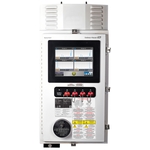
- Raman analyzer / spectrometer (ideally multi-channel)
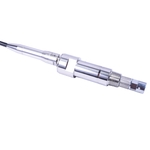
- Raman probes / sensors
- Raman method
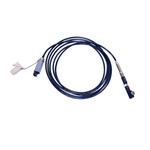
- Fiber-optic cables
- Sampling interface
- Integrated rack
Raman systems and the future energy transition

In the race to decarbonize, speed and precision matter. Raman spectroscopy empowers agile green ammonia and green methanol plants to deliver high-quality, low-carbon fuels with confidence. As dynamic production models become more common, advanced analytical tools like Raman technology will be essential to scaling green feedstock and eFuel solutions. By ensuring consistent quality in variable conditions, Raman spectroscopy plays a vital role in making green ammonia and green methanol viable at scale.
Frequently asked questions (FAQs)
Download the white paper

References
- Eurelectric. Understanding ultra-low and negative power prices: causes, impacts and improvements. Dec. 2024.
- Fedrigo, M. Executive Summary. Politecnico di Milano, Polimi Archive, July 2024.
- Global Market Insights. Green Methanol Market Forecast. GMI Insights, Sept. 2024.
- Helmenstine, A. M. Haber-Bosch Process. Science Notes, 26 Apr. 2025.
- Rouwenhorst, K. Status of Renewable Ammonia Projects and Technology Licensors. Ammonia Energy Association, 18 Nov. 2025.
- Santarpia, S., Roelstraete, K., and Aimoz, L. Optimizing Green Ammonia Production with Raman Spectroscopy. Chemical Engineering, 31 July 2025.
- Shell Global. Pathways to Meet Transport Renewable Energy Targets. Shell TechXplorer Digest, 2022.
- Topsoe. Green Methanol | Modular eMethanol Plants for Power-to-X Projects.
- Topsoe. REDDAP: The World’s First Dynamic Green Ammonia Plant. State of Green, 8 Aug. 2022.
- Thyssenkrupp Uhde. Sustainable Agriculture & NH₃ Derivatives.
- World Economic Forum. Sustainable Development Impact Meetings 2024. Sept. 2024.