Continuous Raman-based measurement of hydrogen and gas quality parameters close to injection points and across pipeline networks for safe and efficient blending.
Hydrogen is increasingly blended into existing natural gas pipelines to support decarbonization. Pipeline operators must ensure that hydrogen concentration remains within defined safety and gas quality limits while operating dynamic and often bidirectional networks. Traditional gas chromatographs are slow, maintenance‑intensive and rely on sample transport and consumables, which limits their suitability for fast transient events and multipoint monitoring.
Operators require continuous, reliable hydrogen measurement close to injection points and across long pipeline sections to regulate blending rates, detect stratification effects and validate hydrogen distribution. In addition, accurate derived values such as heating value (Btu) and Wobbe index are essential to meet pipeline specifications and regulatory requirements.
Solution overview:
Available for:
Chemical
Mining, Minerals & Metals
Oil & Gas / Marine
Power & Energy
Hardware & Software:
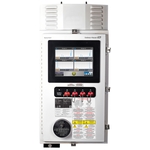
Raman Rxn5 analyzer
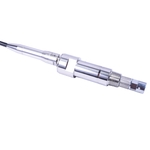
Rxn‑30 probe
Fiber‑optic cable up to 150 m
Raman RunTime operational software for setup and operation
Secure remote access via HTTPS
Services:
Project management
Basic and detailed engineering
Project Site Services
Documentation and certification
FAT and SAT testing
Smart support services
Dynamic, multipoint hydrogen measurement with fast response and no consumables during normal operation for safe natural gas blending
The solution uses Raman spectroscopy for continuous, in‑situ measurement of hydrogen and other gas components directly in the pipeline. It delivers fast response times (15–60 seconds) and supports up to four simultaneous measurement points per analyzer, including bi‑directional pipelines. The system measures hydrogen from low percentages up to 100% and calculates derived values such as heating value and Wobbe Index in accordance with ISO and GPA standards. Minimal sample conditioning, no carrier gases and non‑destructive analysis reduce maintenance effort, emissions and total cost of ownership while enabling reliable validation of hydrogen blending strategies.
Increased safety
Fast detection of transient hydrogen events supports safe pipeline operation
Reliable gas quality monitoring
Continuous measurement of hydrogen content and derived values such as
Wobbe index and heating value
Zero emissions sampling
Non‑destructive analysis with no flaring and no carrier gases
Lower operating costs
Minimal maintenance, no consumables and reduced sample conditioning
complexity
Support for decarbonization
Validated hydrogen blends from low percentages up to 100% hydrogen
With the help of process measurement solutions from Endress+Hauser, a new Long Ridge Energy (LRE) power plant is successfully showcasing the viability of clean hydrogen in the Power & Energy industry.