


Where performance is lost in synthetic rubber polymerization
In solution styrene butadiene rubber (SSBR) and emulsion styrene butadiene rubber (ESBR) production, the largest losses in yield, consistency, and productivity occur inside the batch, when reaction kinetics and microstructure evolution are not visible in real time. Without that insight, opportunities for earlier control actions — and for validating the reaction endpoint sooner while the batch is still running — are missed, delaying decisions that could otherwise increase space-time-yield and effective reactor capacity. Critical decisions, such as endpoint detection or corrective adjustments, are often delayed by offline sampling and laboratory turnaround times. These delays do not just affect quality — they consume valuable reactor time after the reaction has effectively reached its optimum endpoint, limiting how many batches the reactor can produce per year.
Because the defining properties of synthetic rubber are formed during polymerization, missed reaction windows cannot be recovered. Most rubber production is run using a shortstop to avoid over-polymerization, i.e., reactions are stopped well ahead of the optimal conversion. This results in unrealized product conversion, increased batch-to-batch variability, and requires expensive stripping and recovery processes. The result is downgraded or off-spec material — outcomes that directly erode reactor utilization, production capacity, and operating margin.
What becomes visible with inline Raman spectroscopy
Inline Raman spectroscopy embeds chemical intelligence directly at the reaction zone inside synthetic rubber reactors and bring precision into endpoint monitoring to achieve Mooney viscosity and conversion rate goals. Raman probes measure the chemical composition in the reacting mass itself, under real temperature and pressure conditions, while the batch is running. This provides continuous, in‑situ visibility into reaction kinetics and microstructure evolution exactly where polymer chains are formed, rather than inferring behavior from delayed or external samples.
Real-time Raman monitoring makes the following visible:
- Monomer consumption (butadiene and styrene)
- Reaction kinetics throughout the batch
- Microstructure evolution (cis, trans, vinyl, styryl)
- Isomer distributions influencing glass transition temperature (Tg)
- Early polymer block formation and agglomeration risks
Because these measurements are performed inline, reaction behavior is observed as it evolves, not reconstructed later from delayed laboratory data.
How reaction visibility changes operational decisions
Because this insight is generated inside the reactor, during the batch, operators no longer rely on extrapolation from lab samples taken hours apart.
When reaction kinetics and microstructure are visible continuously during the batch, operational control shifts from reactive to proactive. Operators no longer wait to understand what has already happened; they can intervene during batch evolution, before deviations propagate.
Raman insights enable these actions:
- More confidence with endpoint calls
- Immediate feed or condition adjustments when microstructure drifts
- Real‑time go/no‑go decisions during the batch
- Decision‑grade insight on whether to boost stalled reactions (e.g., initiator or monomer addition)
- Elimination of manual sampling of hazardous materials from high‑temperature, high‑pressure reactors
Data-driven endpoint calls are not just a control improvement; they are a capacity lever. When endpoints are validated in real time, batches can be terminated as soon as target conversion and microstructure are achieved, rather than waiting for laboratory confirmation. Each avoided hour of unnecessary reaction time translates directly into higher space-time-yield and increased annual production capacity from the same reactor volume. The value lies not in generating more data, but in decision‑grade visibility when reaction behavior changes.

Engineered batch control inside the rubber reactor
In the synthetic polymer manufacturing process, batch quality and productivity are most at risk during the reaction itself. By making monomer conversion and microstructure evolution visible continuously inside the reactor, inline Raman monitoring shifts control from delayed laboratory confirmation to real‑time batch‑level insight. Endpoints are detected while the batch is still running establishing an earlier, validated termination point based on actual reaction state rather than delayed lab results. Corrective actions are applied before off-spec material is produced, and decisions are enforced during the reaction rather than after it.
This enables more predictable batch cycles, tighter property control, and higher effective reactor throughput, reducing cost and increasing space-time-yield by design — not by post-batch correction.
From reaction insight to measurable production impact
In SSBR and ESBR polymerization, delayed decisions directly translate into using a shortstop strategy, long batch hold times, longer cycle times, higher variability, and lost yield. By detecting endpoints with more precision and tracking microstructure continuously, inline Raman spectroscopy monitoring compresses batch duration while improving consistency.
Producers can demonstrate in daily operations:
- Earlier endpoint detection and batch release
- Reduced batch-to-batch variability
- Higher yield without sacrificing property control
- Improved reactor utilization through shorter cycle times
- Safer operation by eliminating manual, extractive sampling
These outcomes are achieved during the batch, not through post‑process correction.
In practical terms, earlier validated batch termination means more sellable tons per reactor per year, turning process insight into tangible financial return.
How this value is realized in industrial synthetic rubber plants
Inline Raman spectroscopy is deployed using:
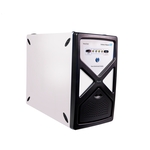
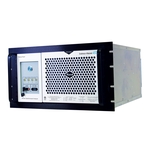
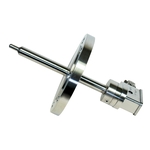
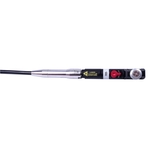
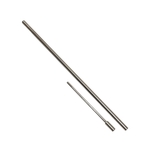
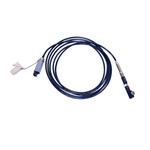
- ATEX‑rated Raman analyzers and immersion or bypass probes
- Continuous measurement under high temperature and pressure
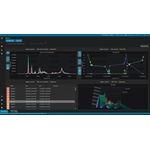
- Real‑time spectral models validated against gas chromatography (GC) and nuclear magnetic resonance (NMR)
- Phased adoption from lab → pilot → production, preserving models and process knowledge
Rather than replacing existing control systems, Raman augments them by making previously invisible reaction variables available for control and optimization during batch operation.
Proven in synthetic rubber polymerization
Inline Raman monitoring has been applied for decades in synthetic rubber processes, including butadiene‑based and nitrile‑butadiene rubbers. Real‑time measurement of monomer conversion and microstructure has enabled faster lab‑to‑process transfer of new grades, more consistent control of Tg‑critical properties, and safer operation by removing manual sampling from hazardous steps.



Why Endress+Hauser?
Endress+Hauser helps synthetic rubber producers engineer predictable, high‑performance batch operations, by embedding process analytical technology (PAT) directly into polymerization workflows.
- Deep expertise in polymerization and elastomer chemistry
- Robust Raman systems for hazardous environments
- Strong application engineering and long‑term partnership
- Extensive global service network with strong local technical support
From development to full‑scale production, we help ensure that every batch is controlled while it still matters.

