


Why CLD slows down in bioprocessing
In cell line development (CLD), timelines stretch when growth insight arrives after the decision window — especially while screening large clone panels from milliliter‑scale cultures. Inline Raman spectroscopy analysis with a micro-volume flow setup turns viable cell concentration (VCC)/viability trends into an operational signal you can use during screening for early detection: rank sooner, retest less, and preserve culture volume while keeping workflows compatible with future automation.
The clone screening process is a throughput problem disguised as an analytics problem. You can measure cells — but not fast enough, not consistently enough, and not without consuming precious early cultures. When VCC insight lands late, teams delay down‑selection, repeat confirmatory runs, and extend the screening–passaging loop, increasing time and cost across the program.
The VCC trend you can act on
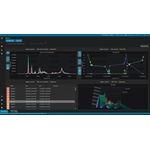
Raman spectroscopy enables non-invasive, online trending of cell concentration and viability signals across multiple cultures. With chemometric models built across a broad VCC range, teams can differentiate relative VCC trends across Chinese hamster ovary (CHO) clones — and compare candidates with less dependence on reagent‑based counting cycles.
What becomes visible with Raman spectroscopy:
- Early VCC separation between clone candidates (ranking signal)
- Growth trajectory during screening and passaging (trend, not a snapshot)
- Comparable signals across CHO lines / expressed proteins (screening consistency)
This essential capability has been demonstrated in peer‑reviewed studies showing that Raman spectroscopy can reliably model cell growth, viable cell concentration and metabolic profiles in CHO cell cultures across varying conditions.
Designed for milliliter cultures and high throughput
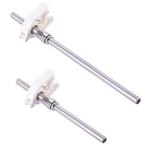
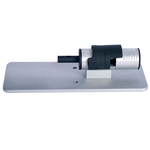
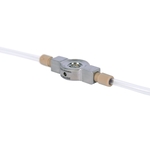
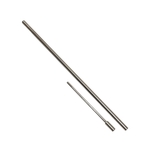
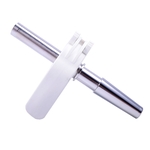
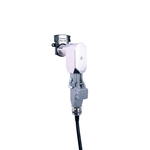
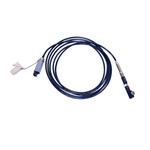
To match early-stage constraints, a Raman flow-based system is deployed in a small-volume configuration that supports reliable spectral acquisition from minimal sample volumes. The microflow cell minimizes consumption while maintaining spectral quality, and its architecture supports future integration into automated handling concepts.
This engineered workflow aligns with CLD needs:
- Small sample volumes
- High screening throughput
- Reproducible measurements across many cultures
- Future integration into automated cultivation platforms

Faster clone ranking with less re-testing
When VCC trends are available with minimal sampling burden, decisions shift earlier. Teams can triage under‑performers sooner, stabilize passaging decisions, and converge faster on robust, productive clones — without waiting for slow assay turnaround. The outcome is not “more data”; it’s better timing: rapid results allow for decisions to be made while the clone set is still wide and options are still open.
Operational gains you can measure in CLD
By reducing reliance on consumable‑heavy counting cycles, CLD teams can document:
- Shorter screening cycles and faster down‑selection
- Lower reagent/consumable use
- Less culture volume consumed in early development
- More consistent comparability across large clone sets
- Analytics that scale toward automation, not isolated manual steps

CLD screening workflow at KBI Biopharma
In a documented CLD application, Raman spectroscopy supported predictive modeling for cell concentration monitoring across multiple CHO cell lines expressing different recombinant proteins, ensuring simple differentiation across a wide VCC range while minimizing sample volume.
Beyond feasibility, the deployment showed how Raman spectroscopy trending can fit naturally into CLD workflows — from experimental design through model building — and support a longer‑term path to automated upstream monitoring.

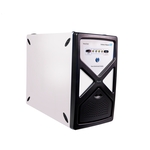

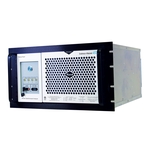
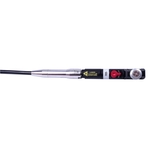

Why Endress+Hauser?
Endress+Hauser supports cell line development from experimental design through chemometrics modeling and training, delivering Raman spectroscopy solutions tailored for micro‑volume analysis and automation‑ready processes.
Our focus is not on instrumentation alone, but on helping CLD researchers move faster with confidence, preserving valuable cell cultures while ensuring earlier, better‑informed process decisions.

How inline measurements add value to bioprocessing beyond CLD
This white paper outlines practical ways to apply real‑time, inline measurement from development through upstream and downstream operations. Learn how connecting critical process parameters (CPPs) and critical quality attributes (CQAs) earlier in the process supports smoother tech transfer, more confident control decisions, and measurable improvements in yield and product quality.
Inside, you’ll explore:
- How real‑time CPP and CQA insight supports earlier, better‑informed decisions
- Where inline and multi‑attribute sensors add value across upstream and downstream processes
- How Raman spectroscopy contributes to monitoring composition, quality, and consistency
- What measurement continuity looks like from lab development to production

